The Biological Hijack: Why You “Freeze” or “Flame”
In the high-stakes world of modern trading, we like to think of ourselves as logical machines making rational choices based on data. But the reality is far messier. Every time you enter a trade, you aren't just engaging your 'Strategy'—you're engaging your Autonomic Nervous System.
When the market moves against you, or when you're staring down a major Prop Firm challenge, your brain often undergoes what neuroscientists call an Amygdala Hijack. The amygdala is the prehistoric part of your brain responsible for the 'Fight, Flight, or Freeze' response. It's incredibly fast, but it's also incredibly blunt. It doesn't care about your Fib levels or your 200-day EMA; it only cares about your survival.
As the amygdala takes control, it shuts down the Prefrontal Cortex (the logical, decision-making center). This is why you find yourself "freezing" on a valid entry or "flaming" through a series of revenge trades. You aren't being "stupid"; you're being biological.
The Data Root: Clinical research shows that under high emotional stress, the human ability to recall complex rules (like your trading plan) drops by over 60%. You are literally a different person when you are afraid.
Enter the Mirror: How AI Sees Your “Ghost”
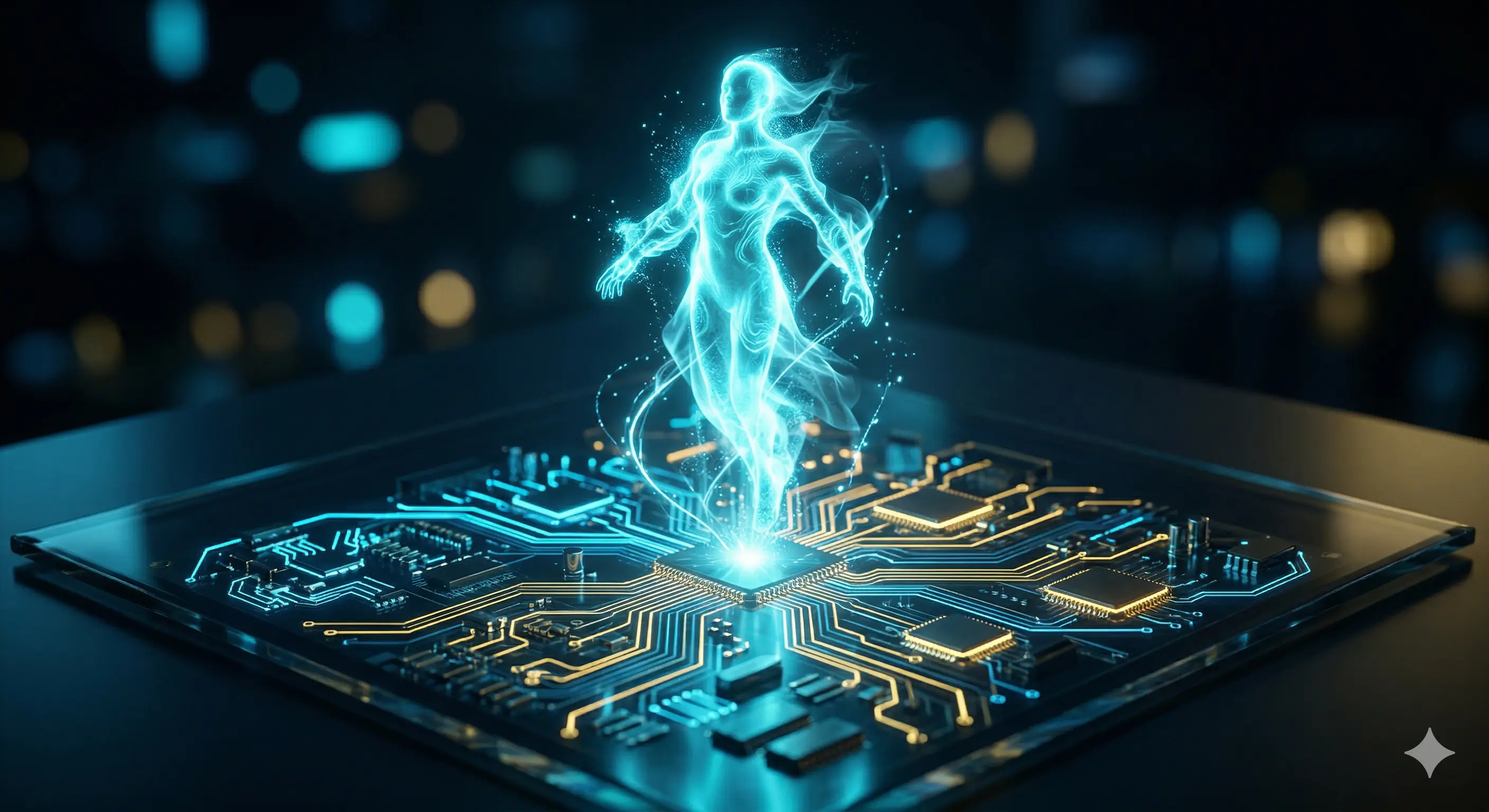
This is where the concept of the Ghost in the Machine comes in. In trading, the 'Ghost' is the collection of sub-conscious emotional patterns that haunt your execution. You might think your strategy is failing, but the data often shows it's actually your sub-conscious reactions that are the bottleneck.
Traditional journals can't see this because they rely on your memory of the event—and as we've established, your memory is compromised while you're emotional. Toastlytics, however, acts as an unbiased digital mirror. By applying machine learning to your execution data, it identifies the "ghostly" footprints of fear before you've even closed the platform.
1. The Pre-Tilt Signature
Long before a trader "blows up," there is a signature. It usually starts with a Position Size Drift—subtly increasing risk after a minor loss—followed by a decrease in Trade Duration. AI identifies this correlation immediately, flagging it as a "Pre-Tilt Scenario."
2. The Hesitation Matrix
Fear doesn't always manifest as aggression; sometimes it manifests as paralysis. Using historical data, AI can detect when you have skipped three "Grade A" setups and then entered a "Grade C" setup out of desperation. This "Hesitation Penalty" is one of the most hidden costs in trading.
3. The Recovery Fever
Human beings have a deep-seated need to "get back to break-even." AI tracks your win rate and execution quality precisely as you approach the break-even line for the day. If your metrics drop as you get closer to $0.00, you are suffering from Recovery Fever—a pattern that leads to unnecessary over-trading.
The “Flow State” Solution: Using Data to Calm the Brain
If the problem is biological, the solution must be structural. You cannot "will" yourself to be calm once the hijack has started. Instead, you must use data to create a "System 2" circuit breaker.
By reviewing your Toastlytics Emotional Heatmap, you can begin to see the specific times, days, and market conditions where your "Ghost" appears. Are you a revenge trader on Monday mornings? Do you hesitate after NFP? Once you see the pattern as a datapoint rather than a moral failure, the emotional sting disappears.
- Audit the Pattern: Identify your top 3 emotional leaks in the Toastlytics Dashboard.
- Externalize the Rule: Instead of "I will be disciplined," use "If my AI Emotional Index drops below 40, I close the platform."
- Optimize the Environment: Traders in a "state of flow" have a 450% higher persistence rate over 12 months than those who trade on "gut feeling."
Actionable Mastery: The 3-Step Exorcism
If you feel the "ghost" starting to appear in your current session, implement this immediate protocol:
- Physical Reset: Stand up and move for 60 seconds. This signals to the amygdala that you are moving away from the "threat."
- Data Review: Open your Toastlytics session report. Looking at cold, hard numbers reactivates the Prefrontal Cortex.
- Size Down: Reduce your next three trades to 25% of your normal size. This lowers the stakes enough for your logic to return.
The goal isn't to be a robot; it's to be a human being with the most advanced machine in your corner. Let the AI handle the data, so you can handle the discipline.