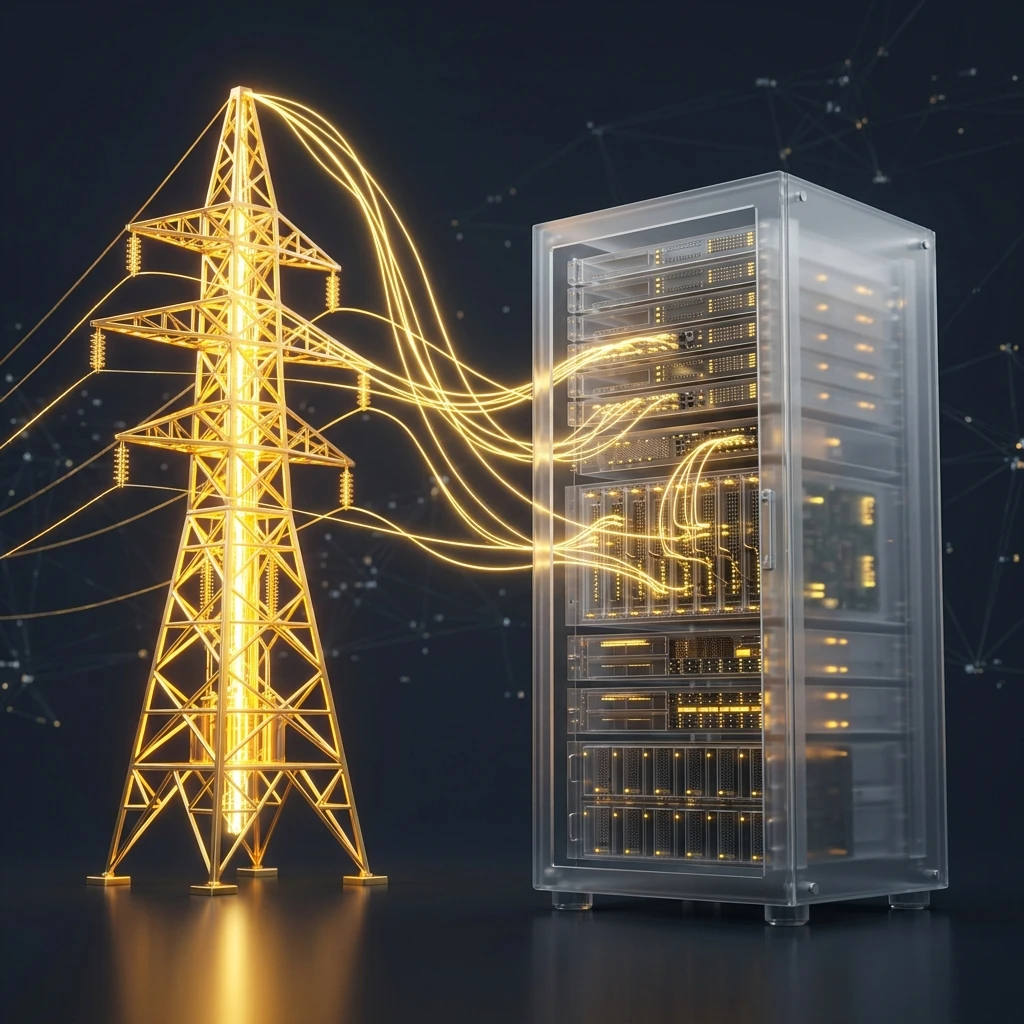
NextEra Energy's confirmed $66.8 billion all-stock acquisition of Dominion Energy represents the largest utility deal in history. The combined entity will become the world's largest regulated electric utility, serving approximately 10 million customers across Florida, Virginia, North Carolina, and South Carolina. While headlines focused on consolidation, macro analysts recognized the true driver: the insatiable power demand of AI data centers.
Data center expansion is consuming electricity faster than the regional power grids can supply it. This supply-demand imbalance is already sending price signals through wholesale energy markets. In the PJM Interconnection—the grid operator covering much of the mid-Atlantic region including Northern Virginia (the data center capital of the world)—wholesale power costs rose by a staggering 75.5% year-over-year in Q1 2026.
The Real Pick-and-Shovel Play: While investors chase chip designers and software application layers, the foundational constraint of the AI revolution remains physical. An AI query consumes up to ten times more electricity than a traditional Google search. Without a massive expansion in power capacity, the computational hardware of tomorrow cannot run.
The Data Center Grid Bottleneck
For years, utility companies operated as low-growth, high-yield defensive investments. However, the generative AI infrastructure boom has transformed the utility sector into a growth engine. Large-scale data centers containing thousands of high-performance GPUs require dedicated power substations and transmission lines. In regions like Northern Virginia, the local grid is operating near maximum capacity, forcing utilities to refuse or delay connections for new data center projects.
By acquiring Dominion Energy, NextEra secures a massive foothold in Virginia and the Carolinas—the exact geographic corridors where data center density is highest. The deal allows NextEra to leverage its industry-leading clean energy portfolio (wind and solar) to supply carbon-neutral power to tech hyperscalers like Microsoft, Google, and Amazon, who have committed to net-zero carbon goals.
Macroeconomic Ripple Effects
The utility infrastructure boom is not just a localized corporate story; it has broad macroeconomic implications:
- Wholesale Inflation Pressures: The 75.5% spike in Q1 PJM wholesale power costs represents a major cost input for industrial manufacturers and retail businesses alike. Rising power costs are structurally inflationary, presenting a new challenge for the Federal Reserve's inflation target.
- Capital Expenditure (CapEx) Diversion: Building transmission lines, upgrading substations, and constructing new generation facilities is capital-intensive. The massive CapEx requirements of the utility sector will compete with other industries for capital, keeping borrowing costs elevated.
- Energy Policy Shift: The transition to renewable energy is colliding with the immediate, base-load power demands of AI. Hyperscalers need constant, uninterruptible power, which is forcing utility providers to keep natural gas facilities active longer than previously planned.
The Trader’s Playbook: Trading the Infrastructure
For macro traders, the NextEra-Dominion merger signals that the AI trade is moving downstream. Long utility positions, particularly in operators with heavy exposure to data center hubs, are no longer just bond proxies. They represent a fundamental exposure to the AI scale-up. Furthermore, the rising wholesale costs of electricity highlight clean energy suppliers, natural gas producers, and transmission equipment manufacturers as key components of the AI infrastructure supercycle.
Original Analysis by Toastlytics Research Team. Sources: Dominion Energy Investor Relations, NextEra Press Release, PJM Interconnection Q1 Report, and Bloomberg data.