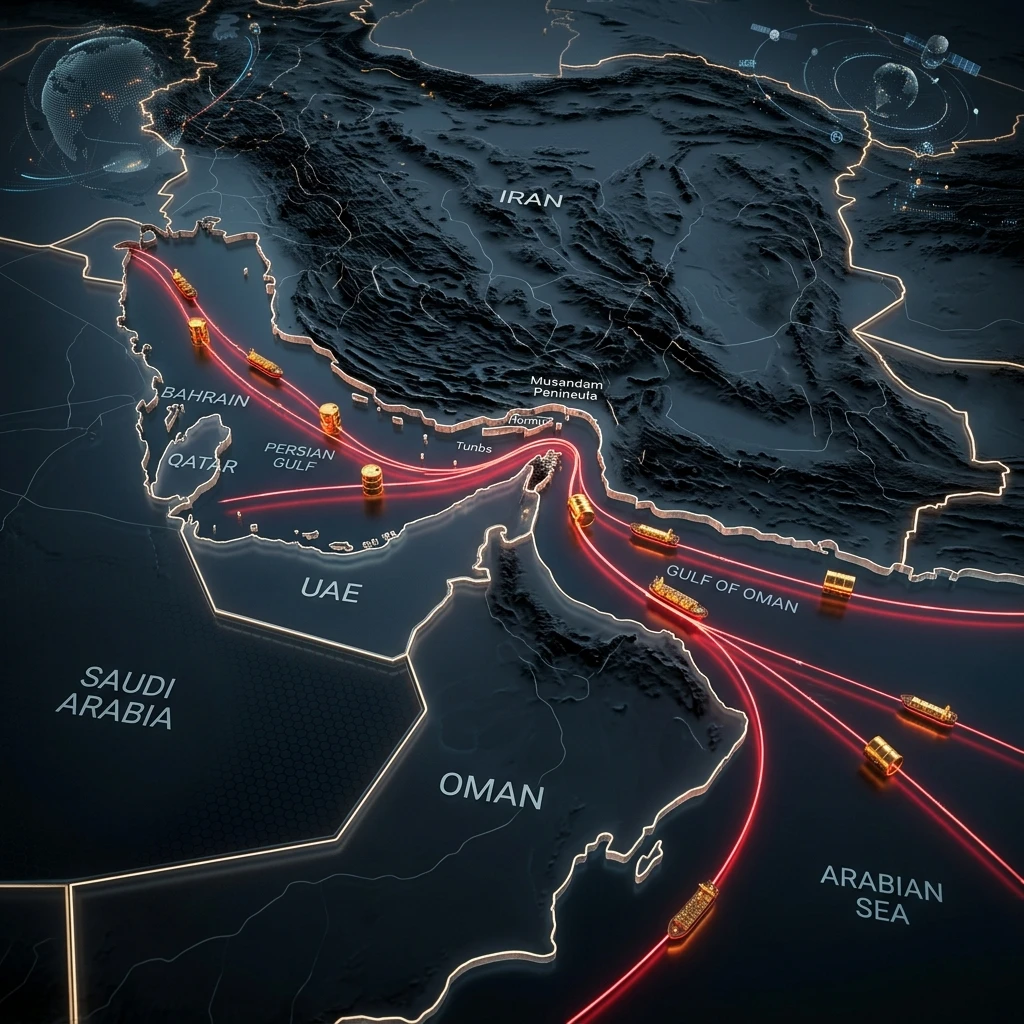
The Bottleneck of Global Energy
The Strait of Hormuz is the world's most important oil transit chokepoint. With recent naval escalations, the market is no longer pricing in 'if' a disruption occurs, but 'how long' it will last. Our macro-models indicate that a full blockade, even for 72 hours, would trigger an immediate liquidity vacuum in energy futures, potentially pushing Brent Crude toward the $120 mark.
The USD as a Geopolitical Hedge
In a high-oil-price environment, the US Dollar historically acts as a safe-haven anchor. However, the 'Energy Inflation' caused by a blockade creates a complex dilemma for the Federal Reserve. High oil prices act as a tax on the consumer, slowing growth while simultaneously driving up CPI. This 'Stagflationary' pressure is the primary reason for the recent hawkish tone from Fed officials.
Market Impact Vectors:
- Equity Sell-off: Transportation and manufacturing sectors will face immediate margin compression. Watch the $TRAN index for leading weakness.
- Currency Divergence: Oil-importing nations (Japan, Eurozone) will see significant currency depreciation against the USD and CAD.
- Volatility Spike: The VIX has a 0.82 correlation with oil price spikes during geopolitical crises. Expect wide, erratic swings in the SPX.
What Traders Should Monitor
If you are holding weekend exposure, you are trading the headlines, not the charts. At Toastlytics, we recommend reducing position sizes by 50% during these periods of extreme 'Tail Risk.' Use our **Correlation Matrix** to see if your portfolio is inadvertently over-exposed to energy-sensitive pairs.
Original Analysis by the Toastlytics Macro Research Group.