The market’s reaction to the US-Iran preliminary peace agreement has been nothing short of explosive. Brent crude plummeting below $80/barrel and the S&P 500 surging to record highs are the kind of headlines that scream “risk-on” across trading desks worldwide. And for good reason – easing global energy supply concerns and de-escalation of a major geopolitical flashpoint are certainly bullish catalysts.
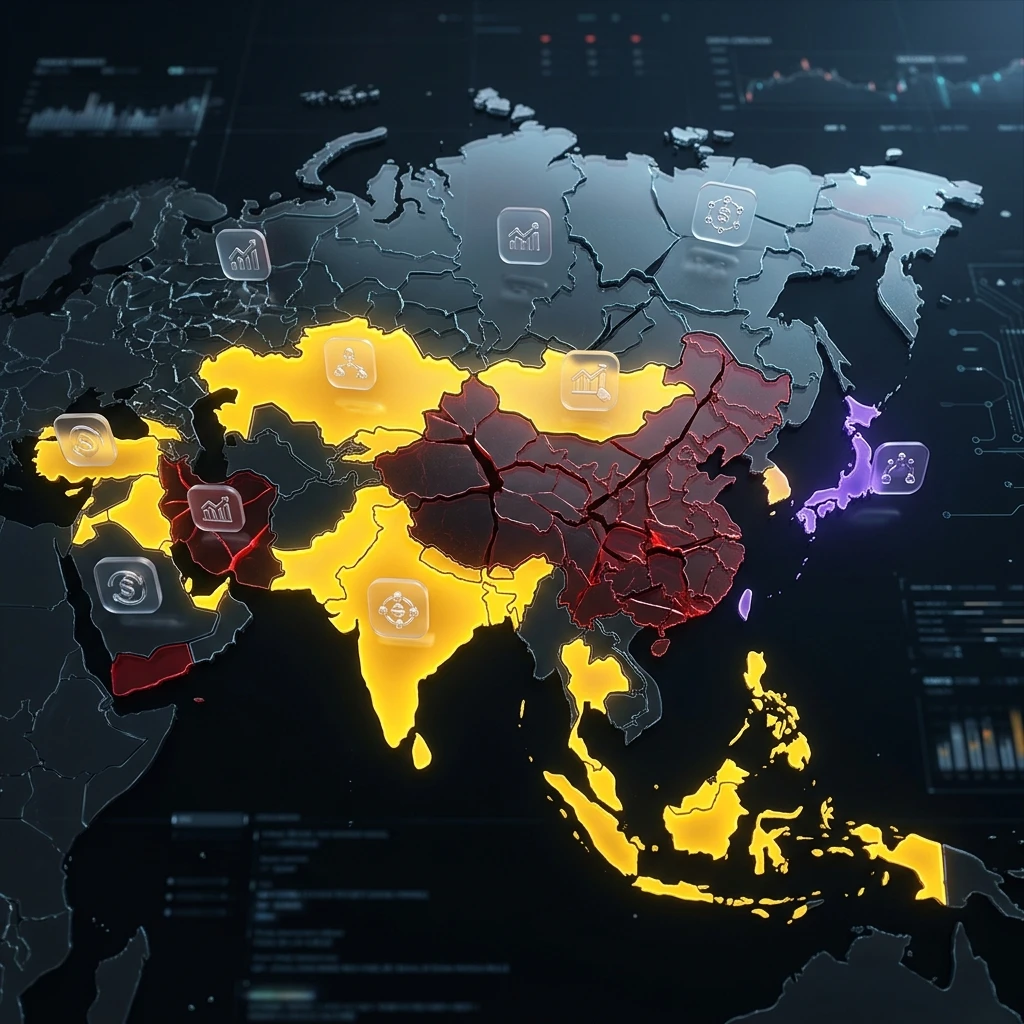
But here’s the rub, challengers: while the West may be popping champagne corks, Asia is still very much navigating a post-conflict landscape riddled with deeper, more insidious economic scars. The headline peace dividend isn’t distributing evenly. For prop firm traders, this isn’t a time for blanket risk-on plays; it’s a call to arms for granular analysis and the identification of asymmetric opportunities.
The Illusion of Uniform Recovery: Asia’s Divergent Reality
The core insight today is this: the global risk-on narrative is a broad brushstroke, and Asia is a canvas of fragmented realities. While the immediate shock of the Iran conflict might be subsiding, the structural economic problems it exacerbated, alongside pre-existing domestic headwinds, are far from resolved. This creates a powerful divergence that savvy traders can exploit.
Let’s break down the key players in this uneven recovery:
China: The Elephant in the Room, Still Stalling
China’s economy remains a significant drag on global growth, and by extension, on Asian markets. The fact that China’s finance chiefs are taking center stage at the Lujiazui Forum, potentially signaling new support measures, is not a sign of strength; it’s an admission of deep-seated issues. A stalling Chinese economy means reduced demand for commodities and goods from its regional partners, dampening the prospects for a robust, export-led recovery across Asia.
For traders, this translates to continued headwinds for the Chinese Yuan (CNY) and currencies heavily exposed to Chinese demand, like the Australian Dollar (AUD). The RBA’s decision to pause rate hikes, explicitly citing inflation above target and the “Iran deal uncertainty,” suggests they’re not convinced the coast is clear. If China continues to struggle, the AUD/USD could face renewed downside pressure, even with a softer global oil price environment.
Japan: A Yen for Weakness, Despite the Hike
Perhaps the most glaring example of Asia’s structural issues is Japan. The Bank of Japan (BOJ) raised its policy rate by 25 basis points to 1% – the highest since 1995 – yet the Japanese Yen barely budged against the US Dollar, fluctuating above 160.00. This is a profound signal. A major central bank hike, typically a strong bullish catalyst for a currency, failing to generate significant upside indicates deeply entrenched weakness.
Add to this Japan’s trade balance swinging to a deficit for the first time in four months, primarily due to the weak yen inflating import values. This is a feedback loop of pain: a weak yen makes imports expensive, leading to trade deficits, which in turn put further pressure on the yen. The Iran conflict’s “lasting economic scars” on Asia likely include disrupted supply chains or increased costs that compound Japan’s import woes.
For prop traders, the narrative around JPY is clear: don’t fight the structural weakness. Look for opportunities to short JPY against stronger, more resilient currencies, or even against the USD if the Fed’s hawkish posture remains intact (Fed Chair Warsh still faces an inflation test, and rates are expected to hold steady, which could support the USD). The traditional “carry trade” might be dead, but “relative value” trading in JPY crosses remains highly relevant.
The Hormuz Hangover and Persistent Scars
While the US-Iran peace deal should ease oil prices, the Bloomberg report highlights “significant challenges” in restoring normal shipping traffic through the Strait of Hormuz. This means that the logistical bottlenecks and higher insurance costs that plagued trade routes during the conflict aren’t going to vanish overnight. For Asian economies heavily reliant on imported energy and maritime trade, this translates to persistent inflationary pressures and supply chain inefficiencies.
The blanket statement that “Iran War Leaves Lasting Economic Scars Across Asia” isn’t just hyperbole; it’s a fundamental truth that clashes with the global “peace dividend” euphoria. These scars manifest as higher operating costs for businesses, reduced consumer purchasing power due to imported inflation, and dampened investment.
Actionable Intelligence for Prop Firm Challengers
So, how do you trade this divergence, this asymmetric impact of the peace deal on Asian markets?
- Avoid Blanket Risk-On for Asia: Do not assume that because the S&P 500 is hitting record highs, all Asian equities and currencies will follow suit. Identify the specific vulnerabilities.
- Relative Weakness in JPY: The BOJ’s failed attempt to significantly boost the yen, coupled with a deteriorating trade balance, makes JPY a prime candidate for continued weakness. Look for short opportunities in USD/JPY (if the Fed remains hawkish) or other JPY crosses where the counter-currency has stronger fundamentals or a more hawkish central bank.
- Cautious on AUD: The RBA’s dovish pause, explicitly mentioning Iran deal uncertainty and persistent inflation, suggests a cautious outlook. If China’s economy continues to stall, AUD/USD could struggle. Monitor Chinese data closely.
- Targeted Shorts on China-Exposed Assets: Beyond CNY itself, consider indices or sectors within Asian markets that have high exposure to Chinese demand or supply chains.
- Focus on Structural vs. Cyclical: The peace deal is a cyclical relief, but Asia’s problems are increasingly structural. Prioritize trades that acknowledge these deeper issues.
- Risk Management is Paramount: Volatility around these shifting narratives can be extreme. Ensure your position sizing is appropriate for the risk you’re taking. Use a reliable pip-value-calculator to accurately determine your risk per trade, especially on less liquid Asian crosses. Don’t let FOMO from the S&P rally override your discipline.
The global market is a complex beast, and big headlines often mask intricate, localized dynamics. The US-Iran peace deal has undoubtedly injected a dose of optimism, but for Asia, it’s more about surviving the aftershocks than riding a new wave of prosperity. Your edge as a prop firm trader lies in dissecting these nuances and positioning yourself where the market’s perception diverges from the underlying reality.
Stay sharp, stay analytical, and remember that true alpha is found not in chasing headlines, but in understanding the granular truth beneath them. Keep refining your approach with the Toastlytics AI Coach, and always journal your trades to learn from every market twist.