The Legacy of the Manual Row
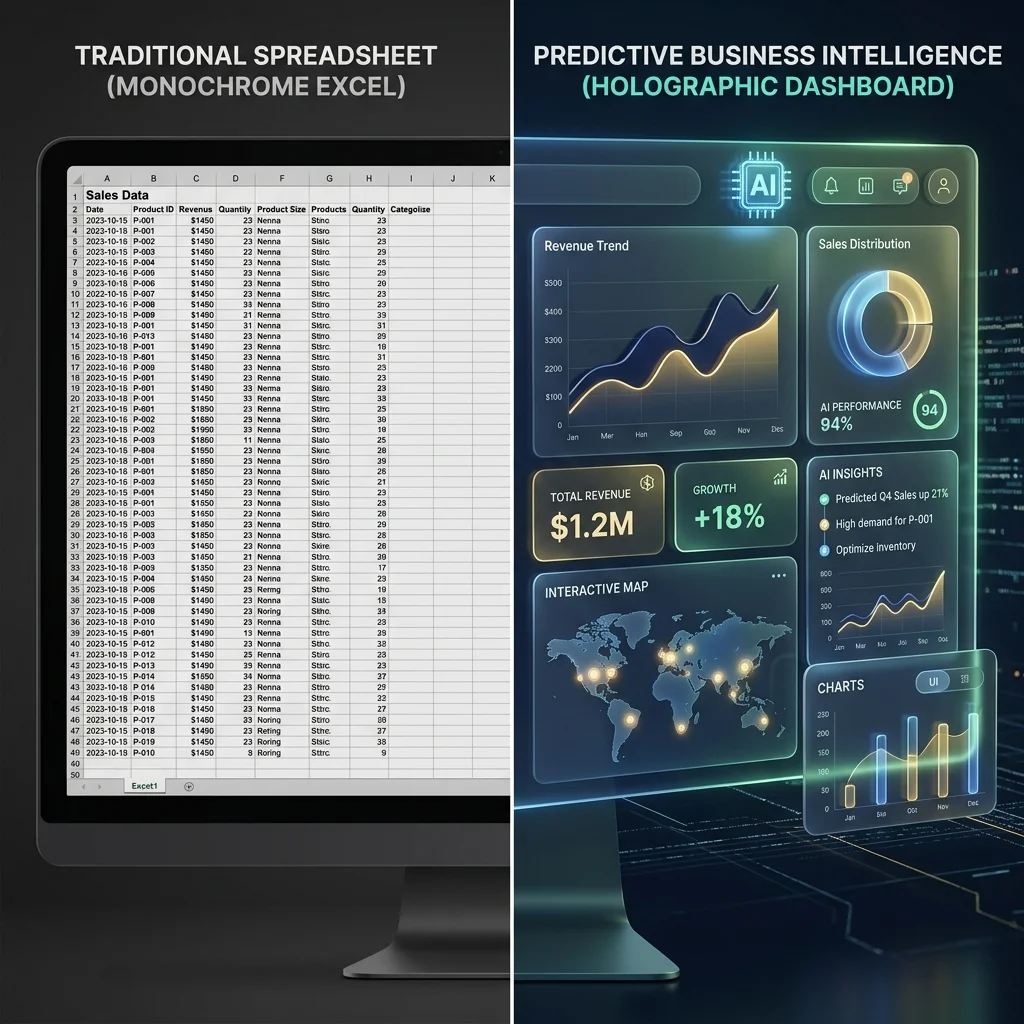
For decades, the humble Excel spreadsheet was the ultimate status symbol of the disciplined trader. After a grueling session, you would meticulously copy your entry prices, exit prices, and a few sentences of "how you felt" into a new row. This ritual was seen as a way to ground yourself in reality. But in 2026, this ritual is no longer grounding you — it's blinding you.
The core problem with manual journals is that they rely on Human Mediation. When you are the one filtering the data, you are the one introducing bias. You are far more likely to "forget" to log a failed revenge trade, or to slightly adjust the "Reason for Entry" to match what your plan should have been, rather than what it actually was. This is known as Selection Bias, and it is the primary reason why spreadsheet-based traders often have a distorted view of their own edge.
Spreadsheets tell you what happened. But they are fundamentally incapable of telling you why it happened across a multi-dimensional dataset.
The Data Friction: Manual logging creates friction. When you have a bad day, the last thing you want to do is open a spreadsheet and relive the losses. This leads to gaps in your data — and the most painful gaps are usually where your biggest lessons are hidden.
The “Invisible Alpha”: Real-Time Metrics You Can’t Calculate Yourself
Modern analytics platforms like Toastlytics do more than just store your trades — they audit them. By connecting directly to your broker's execution feed, the "Human Filter" is removed. For the first time, you have access to what we call the Invisible Alpha — the incremental gains found in the data patterns that no spreadsheet could ever track.
1. The Math of Opportunity Cost
Let's talk about the math of your time. If you spend 30 minutes a day manually entering trades into a spreadsheet, that's 2.5 hours a week, or 10 hours a month. If you are a professional trader, your "hourly rate" is likely in the hundreds of dollars. By using a spreadsheet, you are essentially paying $1,000+ a month for the privilege of doing manual data entry. Automated platforms give you that time back for what actually matters: Review and Backtesting.
2. Static vs. Dynamic Data
A spreadsheet is a static archive. Once the row is written, it's dead. An automated platform provides Dynamic Intelligence. If you change a parameter in your strategy, an AI-driven journal can instantly recalculate your historical performance based on that new rule. It can tell you: "If you had used a 2.0 ATR stop instead of a 20-pip stop over the last 100 trades, your P&L would be 14% higher." Trying to do that in Excel requires hours of formula building; in Toastlytics, it's one click.
3. Cross-Platform Synchronization
In 2026, trading happens everywhere — on your desktop, your phone, and your tablet. A local `.xlsx` file is a nightmare to keep synchronized across devices. Automated platforms provide a unified "Single Source of Truth." You can enter your emotional tag on your phone while walking away from your desk, and it's instantly integrated with the execution data on your desktop terminal.
Case Study: The 4-Hour Edge
A trader specializing in NQ scalping was spending 5 hours a week maintaining a complex Excel journal. They switched to Toastlytics and used those saved 4 hours (keeping 1 hour for review) to perform deep-dive backtests on their "London Open" setup. They discovered a 0.5% edge they hadn't seen before. By simply reallocating their Journaling Time into Research Time, they increased their monthly payout by $2,800. Their spreadsheet was quite literally costing them money.
The Privacy and Security Factor
Many traders stick to spreadsheets because they are "afraid of the cloud." This is another fallacy. A local Excel file is one hard-drive failure or one misplaced laptop away from being lost forever. Most traders don't have a robust backup strategy for their `.xlsx` files. Professional platforms use institutional-grade encryption and multi-region backups, ensuring your life's work is protected against hardware failure and unauthorized access.
The Verdict: Don’t Audit Your History, Leverage Your Future
A spreadsheet is an archive of the past. Toastlytics is a roadmap for the future. The data you are ignoring because it's too difficult to manually track (like MAE, MFE, and Slippage) is the very data that will uncover your next major edge. The "Invisible Alpha" is hidden in the patterns that Excel simply cannot see.
Still copying and pasting? Join the Toastlytics waitlist and step into the future of performance analytics. We don't just store your trades; we find your edge.
Compare your performance in London, New York, Mumbai, and Singapore.