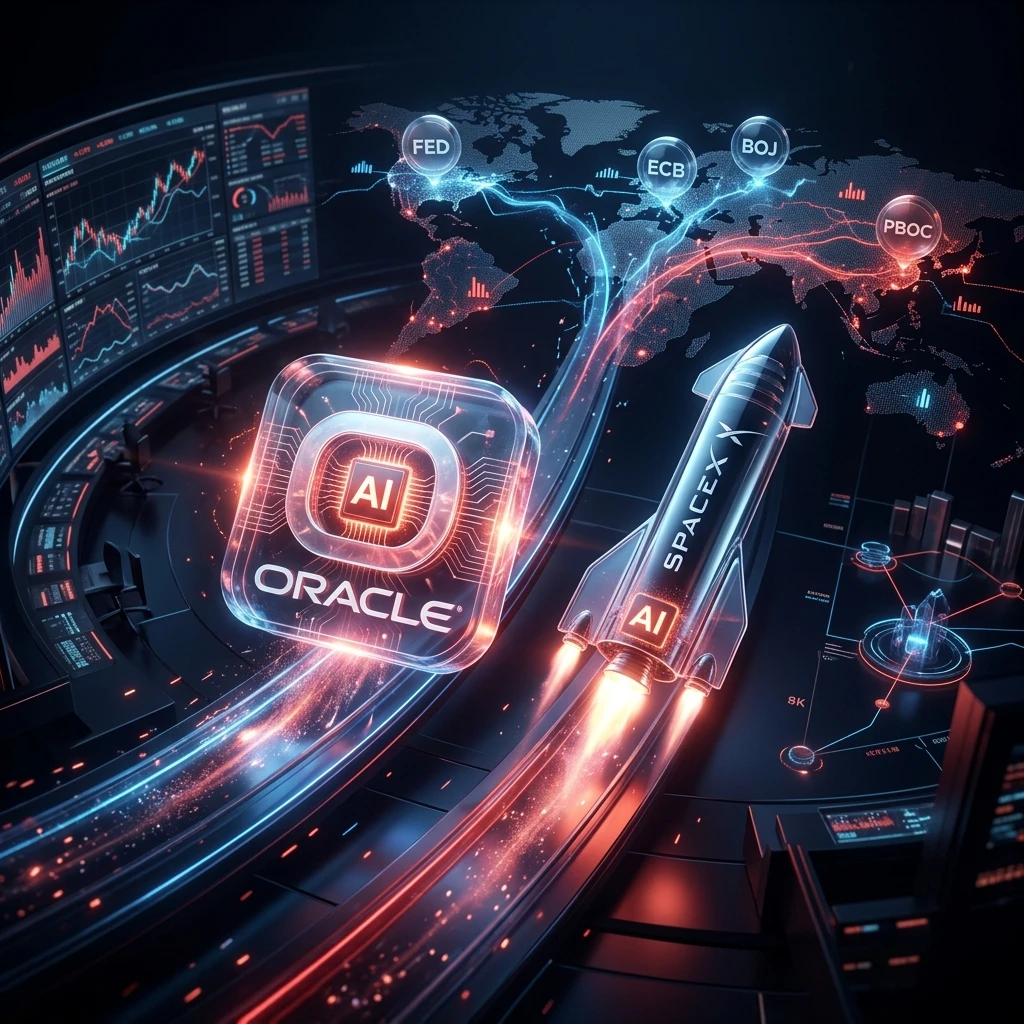
The second week of June 2026 delivered an unprecedented confluence of macroeconomic shifts and corporate milestones. As central banks decisively uncoupled their policies, geopolitical tensions saw an unexpected détente, and artificial intelligence once again proved its dominance as the central driver of global equity markets.
Here is your comprehensive breakdown of the major macro themes that drove the markets from June 8th through the 14th.
1. The Macro Picture: Central Bank Desynchronization
The narrative of a unified global monetary policy is officially dead. This week cemented the reality that traders must navigate a deeply fragmented central bank landscape.
- The ECB’s Hawkish Strike: The European Central Bank (ECB) executed a highly anticipated 25 basis point rate hike, its first since 2023. Driven by persistent, war-induced inflationary pressures and sticky wage growth, the ECB’s move sent immediate shockwaves through currency markets, causing significant Euro volatility as the region attempts to balance stagnant growth with rising prices.
- The Fed’s Data-Dependent Hold: In stark contrast, Federal Reserve Chairman Kevin Warsh faced a complex policy dilemma. Following a hotter-than-expected US Producer Price Index (PPI) report that surged 1.1% in May, coupled with a 4.2% annualized CPI print, the Fed maintained its “higher-for-longer” stance. However, signs of a softening US labor market and stalling manufacturing output kept the Fed from enacting further hikes, placing the Dollar in a turbulent holding pattern.
- Asian Policy Pressures: The Bank of Japan (BOJ) signaled it is poised for a significant rate hike—potentially reaching a 31-year high—as elevated energy costs continue to drive up producer prices. This added further complexity to the USD/JPY dynamic, which remains hyper-sensitive to the widening yield differential between the US and Japan.
2. Geopolitics: The US-Iran Peace Deal
In a massive reversal of recent trends, the geopolitical risk premium was violently recalibrated.
- The Strait of Hormuz Reopens: Global markets rallied sharply on the confirmation of a US-Iran peace deal. The de-escalation immediately reopened crucial shipping lanes in the Strait of Hormuz, causing crude oil prices to plummet from their recent highs. This sudden shift forced prop firm traders heavily positioned in energy markets to execute rapid risk-off maneuvers.
- Gold’s Reflexive Rally: Counterintuitively, Gold rallied over 3%. While typically a safe-haven asset during times of war, the peace deal effectively curbed expectations for aggressive future Fed rate hikes (as the inflationary threat of an oil shock subsided). This dynamic made non-yielding assets like Gold more attractive, demonstrating the complex, multi-layered correlations at play in current markets.
3. Equity Markets: AI Dominance and The SpaceX Mega-IPO
Corporate earnings and historic IPOs dominated the equity narrative, underscoring the relentless momentum of the tech sector.
- Oracle’s AI-Driven Surge: Oracle reported its Q4 earnings, crushing expectations largely due to explosive growth in its AI-driven cloud infrastructure. This robust performance served as a critical anchor for the broader tech sector, reassuring investors that the generative AI supercycle remains firmly intact despite broader macroeconomic uncertainties.
- The SpaceX Mega-IPO: The most anticipated market event of the decade finally materialized. SpaceX’s initial public offering raised a staggering $85.7 billion, a historic milestone that immediately propelled Elon Musk to trillionaire status. The sheer magnitude of this IPO created massive liquidity shifts and indexing rebalances, generating unprecedented intraday volatility.
- Nvidia’s Capital Raise: Further cementing the AI infrastructure arms race, Nvidia announced a $20 billion US bond issuance dedicated to expanding its AI investments and data center footprint. This move signals a profound long-term conviction in the continued expansion of AI computational needs.
Looking Ahead
As we transition into the third week of June, the desynchronization of central bank policies will continue to act as the primary catalyst for forex and bond volatility. Prop firm traders must exercise extreme discipline, as traditional correlations between energy, equities, and safe-haven assets are shifting rapidly. The Toastlytics AI Coach recommends tightening stop-losses during Asian sessions due to the lingering uncertainty surrounding the BOJ’s next move.
Stay disciplined, manage your drawdowns, and trust the data.