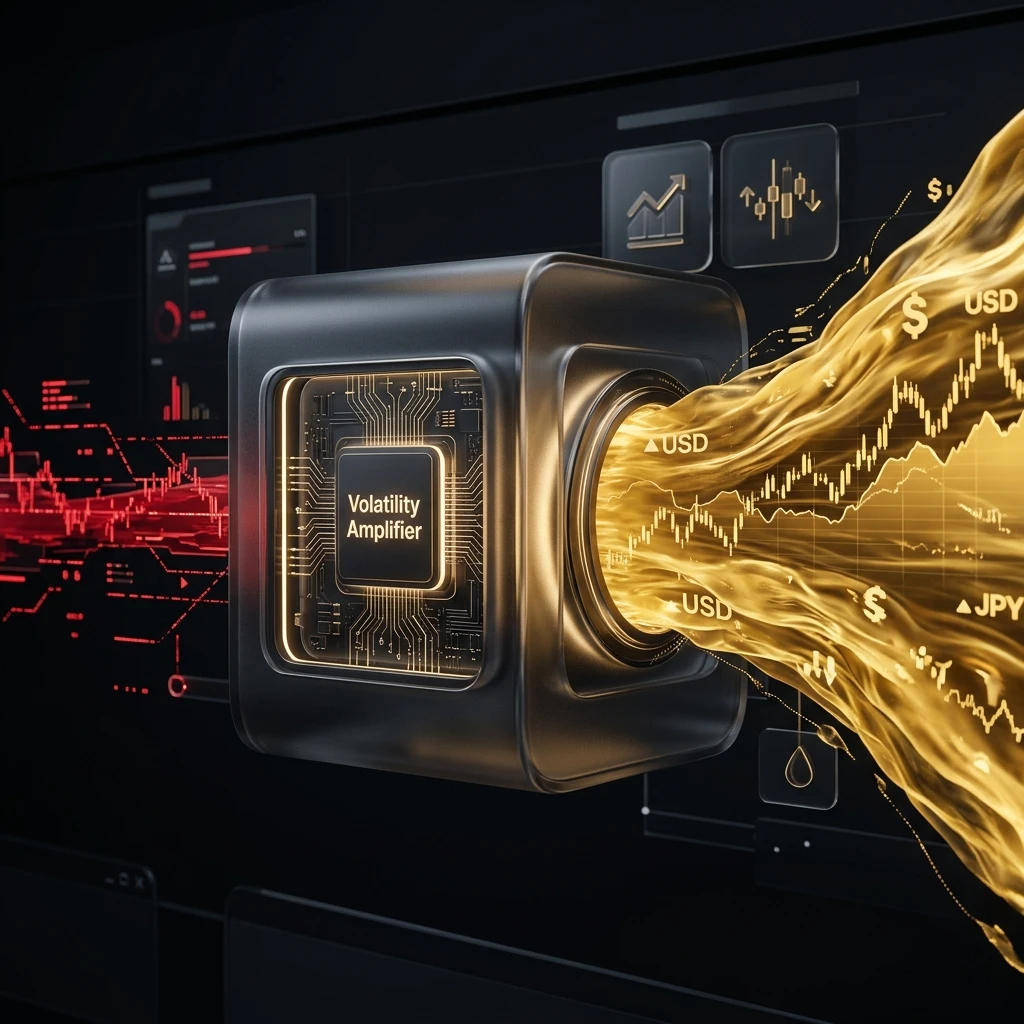
The market is a finely tuned machine, but sometimes, a wrench gets thrown into the gears. Today, that wrench is a geopolitical one, hurled right into the most critical chokepoint for global oil supply: the Strait of Hormuz. We’re seeing reports of ship attacks near Oman, ongoing conflict in Lebanon, and Iran proposing transit fees for the Strait. This isn’t just background noise; it’s a direct hit to the nerves of the global energy market, and as prop firm traders, you need to understand its true impact.
Forget the simplistic notion of a “geopolitical risk premium” – a fixed percentage tacked onto oil prices. What we’re witnessing is a geopolitical volatility multiplier. This isn’t just about oil going up; it’s about how these tensions interact with existing macro narratives, amplifying certain market dynamics and creating unexpected divergences.
Today’s data paints a mixed picture, but the underlying currents are strong. US Core PCE inflation has risen, Q1 GDP was revised higher, bolstering Fed rate hike bets and strengthening the USD. Tokyo CPI also picked up, keeping the BOJ on track for hikes, yet the Yen hovers near 40-year lows against the USD due to interest rate differentials. And then, the tech sector is reeling from Apple’s price hikes and surging chip costs. These are already significant forces. Now, layer a volatile Hormuz situation on top, and you have a recipe for non-linear market reactions.
Beyond the Static Premium: The Volatility Multiplier
A static risk premium implies a predictable addition to price. The volatility multiplier, however, suggests that geopolitical events don’t just add a fixed cost; they magnify existing market sensitivities and accelerate price discovery. Think of it like a ripple effect hitting a stronger current – the ripples become waves, and the waves become breakers.
Consider the interplay:
- Inflationary Pressure: Escalating Middle East tensions immediately raise concerns about oil supply. Higher oil prices directly feed into inflation expectations.
- Central Bank Response: With US PCE already elevated, the Federal Reserve is already leaning hawkish. A sustained oil shock further solidifies rate hike bets, reinforcing USD strength. This creates a feedback loop: geopolitical risk -> higher oil -> higher inflation -> hawkish Fed -> stronger USD.
- Safe-Haven vs. Risk-On Divergence: Traditionally, geopolitical fear would send capital into safe havens like Gold and the USD. While the USD is certainly benefiting from hawkish Fed expectations, Gold’s reaction can be more nuanced. If the oil shock primarily drives inflationary fears rather than outright global growth slowdown, Gold might struggle against a stronger, higher-yielding USD. Meanwhile, risk assets like Asian equities are already under pressure from tech sector woes, so geopolitical risk only adds fuel to their downward momentum.
This complex interplay means that simply buying oil on geopolitical news isn’t a complete strategy. You need to understand how this “multiplier” impacts correlations, implied volatility, and the very structure of market narratives.
Deconstructing the Hormuz Hazard Ratio
To effectively trade this environment, we need a framework that moves beyond gut reactions. Let’s call it the “Hormuz Hazard Ratio” – a dynamic assessment of how geopolitical events in the region are distorting normal market mechanics.
Component 1: Direct Oil Market Impact
This is the most obvious. Any threat to the Strait of Hormuz, through which roughly 20% of the world’s total petroleum liquids and a significant portion of LNG transit, immediately triggers supply concerns. Iran’s proposal to charge transit fees adds another layer – a direct cost increase that will be passed on, regardless of actual supply disruption. This means oil prices will be sensitive to any headline, creating whipsaw potential.
Component 2: The Inflationary Feedback Loop
The surge in US Core PCE to 3.4% and Q1 GDP revision to 2.1% already had the Fed firmly in the hawkish camp. A geopolitical oil shock reinforces this. Higher energy costs permeate supply chains, driving broader inflation. This strengthens the conviction that the Fed will hike in September, underpinning the USD. Prop traders need to watch short-term inflation expectations (e.g., 2-year inflation swaps) for real-time market sentiment.
Component 3: Safe-Haven Flows & Correlation Breaks
Traditionally, in times of geopolitical stress, capital flows to safe havens. The USD is certainly acting as one, bolstered by its yield advantage. However, Gold’s reaction can be tricky. If the dominant narrative becomes “oil-fueled inflation + hawkish Fed,” then real yields rise, which is generally negative for non-yielding Gold. We’re seeing this divergence today: oil prices are volatile, but the robust USD is keeping a lid on gold’s safe-haven appeal.
Component 4: Energy-Exposed Currencies
Currencies of major oil exporters or economies heavily reliant on energy trade will feel the heat. CAD, AUD, NOK, and MXN are particularly susceptible. A rising oil price should benefit commodity currencies, but the global risk-off sentiment that often accompanies severe geopolitical events can sometimes outweigh this. You need to assess if the oil price rise is seen as a positive demand shock (unlikely here) or a negative supply shock (more likely, leading to stagflationary fears). The latter can hurt commodity currencies if it triggers broader economic slowdown fears.
Actionable Intelligence for Prop Firm Traders
Navigating this “Volatility Multiplier” requires a disciplined and dynamic approach.
-
Dynamic Risk Sizing: Your typical position sizing for oil futures or energy-related currency pairs (like USD/CAD, USD/NOK) needs adjustment. Geopolitical news creates gaps and flash moves. Consider reducing your standard lot size and widening your stops. If you usually risk 1% per trade, perhaps dial it back to 0.5% or less for highly exposed assets. Use a robust risk calculator to determine appropriate position sizes based on your chosen stop loss and account equity, and then apply an additional haircut for this elevated volatility.
-
Monitor Implied Volatility (IV): Options markets are your friend here. High implied volatility on crude oil futures options indicates that the market is pricing in larger-than-normal price swings. This is your warning sign that the “volatility multiplier” is active. High IV also means options are more expensive, which can inform your hedging or directional strategies.
-
Look for Correlation Breaks: The normal relationships between assets might temporarily break down. For example, if USD strength typically pressures commodities, but a Hormuz event causes oil to spike, that’s a correlation break. These are often high-alpha opportunities for astute traders. Similarly, watch USD/JPY: the carry trade is attractive, but intervention fears and safe-haven flows can create conflicting signals.
-
Strategic Hedging & Proxies:
- If you’re long oil, consider a partial hedge with a short position in an energy-sensitive currency (e.g., CAD) if you anticipate a broader risk-off move that could eventually drag everything down.
- Consider long USD as a hedge for broader portfolio risk, as the Fed’s hawkish stance and the USD’s safe-haven status are being reinforced by today’s data.
-
Event-Driven Trading with Caution: Geopolitical events are inherently unpredictable. Be prepared for sudden, sharp moves. Avoid chasing spikes or fading dips without confirmation. Price action on the first reaction to news is often emotional; wait for consolidation or a clear technical signal before committing. Understand that news flow can change rapidly, leading to whipsaws.
The Psychology of the Geopolitical Overlay
The “Hormuz Hazard Ratio” isn’t just about market mechanics; it’s about managing your own psychology. Fear of missing out (FOMO) can be incredibly powerful when oil prices are spiking, leading traders to jump into volatile markets without proper analysis or risk management. Conversely, panic can set in if a position goes against you quickly due to a sudden headline.
Your edge comes from discipline. Filter the noise. Stick to your trading plan. Understand that these are high-stakes, high-volatility environments where over-leveraging or emotional decisions can quickly decimate a prop firm account. Maintain a dynamic bias, ready to shift your perspective as the geopolitical landscape evolves.
The market is telling us that while the US economy is robust and the Fed is hawkish, global stability is far from guaranteed. The Hormuz situation is a stark reminder that macro-economic trends can be dramatically interrupted by geopolitical realities. Stay sharp, manage your risk, and let the market show you its hand.
Keep a detailed trading journal, noting your entries, exits, and the reasoning behind them, especially in volatile periods like these. This will help you refine your approach to geopolitical events and identify your own psychological triggers. For deeper insights into your trading patterns and to identify areas for improvement, consider leveraging the Toastlytics AI Coach. It’s designed to help you navigate these complex market waters with greater precision and discipline.