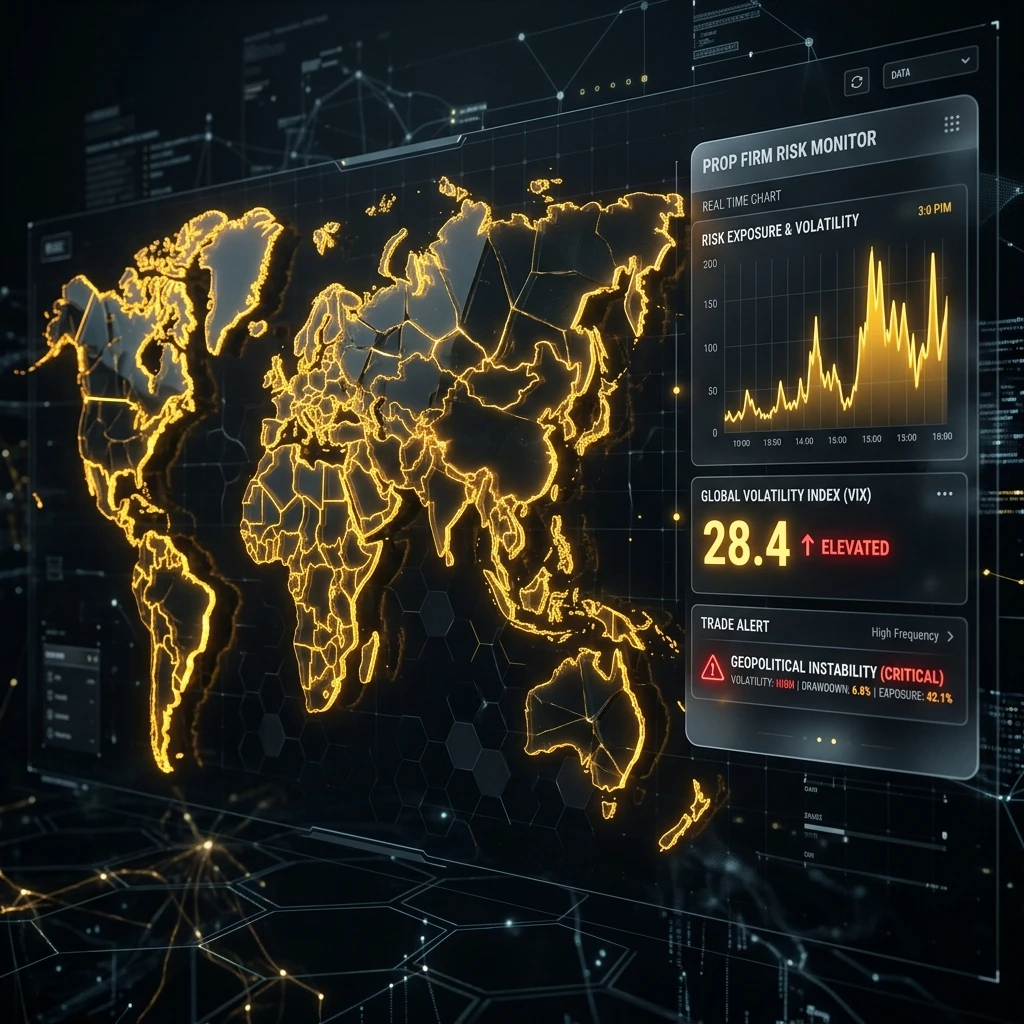
Today’s market isn’t merely “mixed” – it’s a strategically volatile landscape where high-impact narratives are converging, creating an intricate web of risk that demands a nuanced approach from prop firm traders. We’re not just reacting to isolated headlines anymore; we’re navigating a complex adaptive system where geopolitical tremors reverberate through central bank policies, commodity prices, and currency valuations. This interconnectedness, which we’ll call the Volatility Nexus, is redefining what “risk” truly means for your daily P&L.
Forget the simple cause-and-effect. What we’re seeing is a multi-dimensional pressure cooker. Middle East tensions, oscillating between ceasefire hopes and renewed uncertainty, are keeping a firm bid under oil prices. This isn’t just a boon for energy traders; it’s an inflationary impulse that central banks cannot ignore. Simultaneously, we have the European Central Bank practically guaranteeing a 25 basis point hike next week, driven by Eurozone inflation surpassing 3% for the first time in two and a half years. This hawkish stance is designed to strengthen the Euro, but it’s happening against a backdrop where the US Dollar is also drawing strength, not just from potential delays in Fed rate cuts (pending today’s JOLTS data) but also from its traditional safe-haven appeal in times of global uncertainty.
Then, there’s the elephant in the room for FX traders: Japan’s Finance Minister Katayama’s explicit warnings about readiness to intervene if USD/JPY approaches 160. This isn’t a hypothetical. This is a clear, declared line in the sand, backed by recent record interventions. This isn’t just about JPY crosses; it’s about the credibility of monetary policy and the potential for sudden, violent dislocations in liquidity.
The core insight here is that these narratives are not independent. Geopolitical instability fuels oil prices, which exacerbates inflation. This inflationary pressure then forces central banks like the ECB to maintain a hawkish posture, or, in the case of the Bank of Japan, to actively intervene to protect its currency. Meanwhile, the US Dollar plays a dual role – both a beneficiary of hawkish Fed expectations (or lack of dovishness, post-JOLTS) and a safe-haven magnet, creating conflicting signals depending on the prevailing risk sentiment. This feedback loop amplifies volatility and creates an environment where seemingly minor events can trigger outsized reactions across multiple asset classes.
Decoding the Volatility Nexus: Your Action Plan
Prop firm traders, this isn’t the time for autopilot. Your challenge is to not just identify the trends, but to understand the interplay of forces driving them.
1. Dynamic Risk Sizing – Your First Line of Defense
In a market prone to sudden, headline-driven swings, your standard 1% risk-per-trade might be exposing you to unnecessary drawdown. Consider scaling back your position sizes. If a single news flash can move USD/JPY 100-200 pips in minutes, ensure your stop loss isn’t just a number, but a calculated buffer against such shocks. Use a reliable tool like the Toastlytics risk calculator to dynamically adjust your position size based on current volatility and your actual risk tolerance, not just a fixed percentage. A 0.5% or even 0.25% risk per trade might be prudent during these periods. This isn’t about fear; it’s about intelligent capital preservation.
2. The USD’s Double-Edged Sword: Safe-Haven vs. Rate-Cut Dampener
The US Dollar is currently caught in a unique tug-of-war. On one hand, persistent Middle East tensions drive safe-haven demand, pushing the USD higher. On the other, stronger-than-expected US data (like today’s JOLTS) dampens Fed rate cut expectations, also supporting the USD. This means the dollar can rally under both risk-off and relatively hawkish scenarios. Your job is to discern which narrative is dominant in any given trading session. Are markets reacting to geopolitical fear, or to economic strength? The nuance matters for your conviction levels and targets.
3. JPY Intervention: Not a “What If,” But a “When”
The 160 level on USD/JPY is not merely a psychological barrier; it’s a declared intervention zone. For prop traders, this means two things:
- Whipsaw Potential: Be prepared for violent, sudden moves that can trigger stops on both sides. Don’t chase.
- Liquidity Gaps: Intervention often creates liquidity gaps, making execution challenging. Consider reducing exposure or widening stop losses around these critical levels, or simply staying out of the pair when it’s approaching the red zone. This isn’t about predicting intervention, but respecting its potential.
4. ECB’s Hawkish Certainty vs. Global Uncertainty
The ECB hike is priced in. The market expects it. The real trade, therefore, isn’t on if they hike, but on the tone of their statement and any forward guidance. Will they signal further hikes? Will they acknowledge geopolitical risks more directly? This nuance will determine whether EUR/USD truly breaks higher or struggles to maintain gains against a resilient USD. Don’t blindly buy the news; analyze the subtleties.
5. AI Optimism: The Divergent Narrative
While macro and geopolitical forces create a turbulent backdrop, the AI sector continues to show robust performance, with strong earnings from HPE and Alphabet’s massive infrastructure investment plans. This creates a divergence: a strong, tech-driven equity market juxtaposed against a volatile, geopolitically sensitive macro environment. This divergence can lead to rotational flows and unexpected correlations. Keep an eye on the tech giants, but understand their resilience doesn’t negate the broader macro risks.
Mastering Your Psychology in the Minefield
This environment is a crucible for trading psychology. The mixed sentiment, the sudden shifts, the threat of intervention – all conspire to trigger FOMO, revenge trading, and emotional decision-making.
Your discipline is paramount. Stick to your trade plan. If your edge isn’t clear, step aside. There’s no shame in preserving capital during periods of extreme uncertainty. Journal your trades, especially noting your emotional state during these volatile swings. Understanding how these external pressures impact your internal biases is critical for long-term consistency.
The market isn’t just “mixed” today; it’s strategically complex. By understanding the interconnectedness of geopolitical events, central bank actions, and commodity flows, you can move beyond mere reaction and develop a truly adaptive trading strategy. Stay agile, manage your risk dynamically, and let your discipline be your guide through this geopolitical minefield.
Ready to sharpen your edge and navigate these complex market dynamics? The Toastlytics AI Coach can help you identify patterns, refine your strategy, and maintain discipline through journaling, even when the market throws everything it has at you.