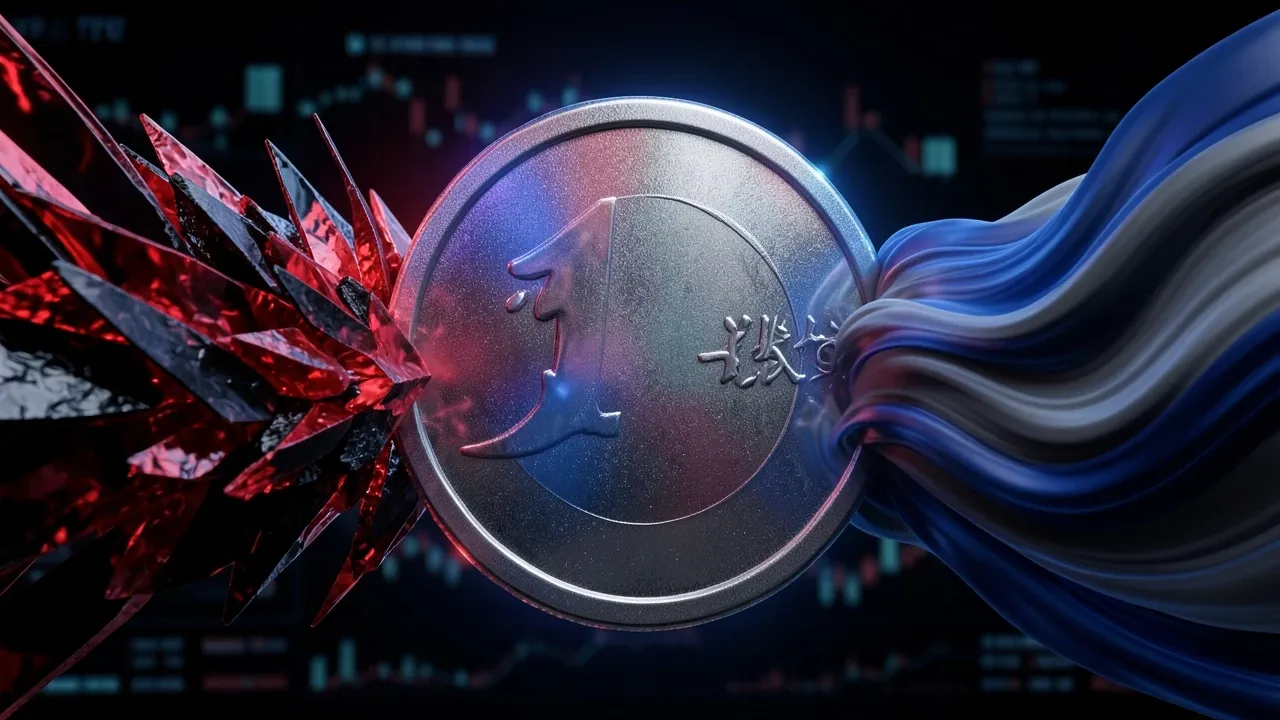
The Euro isn’t just a currency; it’s a live-wire barometer of complex, interwoven pressures right now. If your trading strategy for EUR pairs is solely anchored to economic data releases or textbook technicals, you’re currently sailing directly into a storm that has far more destructive forces at play. Forget your usual indicators for a moment – the current confluence of French fiscal fragility and escalating US-Europe geopolitical friction demands a complete overhaul of your risk posture. This isn’t a market for prediction; it’s a proving ground for adaptability.
The French Fuse: A Eurozone Headache, Not Just a Local Blip
Let’s cut straight to the core: France is becoming the Eurozone’s stress test. We’re seeing French 10-year bond yields surging, hitting levels not seen in two decades, reflecting a palpable and growing concern over the nation’s public debt and political stability. This isn’t just a domestic issue; it’s a systemic risk for the entire currency bloc. When a core member like France shows signs of fiscal strain, it sends shivers down the spine of every Eurozone bondholder and investor.
The narrative goes deeper than just numbers. Persistent social instability in France, fueled by internal political dynamics, amplifies the fiscal concerns. Markets hate uncertainty, and France is currently serving it up in spades. This isn’t a temporary blip; it’s a structural challenge that impacts the perceived creditworthiness and stability of the Eurozone itself. For prop firm traders, this translates directly into a higher risk premium on EUR assets. You need to ask yourself: are you pricing that in, or are you hoping it resolves itself quietly? Hope is not a strategy.
Transatlantic Tremors: Geopolitics Adding Fuel to the Fire
As if internal pressures weren’t enough, the Euro is also caught in the crosshairs of intensifying US-Europe tensions over the Russia-Ukraine war. This isn’t just diplomatic squabbling; it has tangible economic consequences. Escalating tensions can impact trade relations, investment flows, and even energy security, all of which weigh heavily on European economic sentiment. When the geopolitical landscape becomes fractured, the Euro, as a proxy for European stability, takes a direct hit.
This external friction erodes investor confidence, making European assets less attractive and pushing capital towards perceived safe havens, often the US Dollar. The US-Iran conflict, another high-impact geopolitical story today, further contributes to global market volatility, driving up oil prices and fueling inflation concerns. While this supports the USD, it simultaneously makes the Eurozone’s already precarious energy situation even more challenging, adding another layer of downside pressure on the Euro.
The ECB’s Bind: A Tightrope Walk on a Shaky Bridge
The upcoming European Central Bank (ECB) rate decision on October 29th is now complicated by this very bond market turmoil. While the IMF expects at least one more 25 bps hike this year, the independent lifting of borrowing costs in the Eurozone bond market (driven by French concerns, for example) could reduce the need for aggressive further hikes.
This puts the ECB in an unenviable position. Hike too much, and they risk exacerbating the debt crisis in vulnerable member states. Don’t hike enough, and they risk losing credibility in their fight against inflation, especially with oil prices remaining elevated due to global tensions. This policy uncertainty adds another layer of unpredictable volatility to EUR pairs. It’s a classic “damned if you do, damned if you don’t” scenario for central bankers, and a minefield for traders.
Why This Matters for Prop Firms: Beyond the Candlesticks
For prop firm traders, this complex interplay isn’t merely background noise; it’s a direct threat to your capital and your challenge progression.
- Unpredictable Volatility: These macro factors are not orderly economic cycles. They are event-driven, politically charged, and prone to rapid, unexpected shifts. Technical analysis, while always a component, is insufficient when a news headline can invalidate your perfect setup in seconds.
- Correlation Breakdown: Traditional correlations might break down. What normally moves with what might suddenly decouple or move in exaggerated ways. This makes diversified strategies riskier if you don’t understand the underlying drivers.
- Wider Spreads, Higher Slippage: Increased market stress often leads to wider bid-ask spreads and higher slippage, especially during volatile news events. This directly impacts your effective entry and exit prices, eating into your profit margins and potentially hitting stops prematurely.
- Drawdown Management: The biggest danger here is the rapid, non-linear drawdowns these kinds of systemic risks can trigger. Your typical risk parameters might not be robust enough.
Actionable Intelligence: The Defensive Playbook
Given this perilous mix, a defensive stance on EUR pairs isn’t just advisable; it’s imperative.
- Aggressive Position Sizing: This is your first line of defense. Reduce your exposure on EUR pairs significantly. If you normally risk 1% per trade, consider scaling back to 0.5% or even 0.25% until clarity emerges. Use a reliable tool like the Toastlytics Risk Calculator to accurately manage your position size relative to your capital and chosen stop loss. Don’t let ego dictate your lot size when macro forces are this dominant.
- Strategic Hedging: Consider actively hedging your Euro exposure. This could mean taking long positions in perceived safe-haven currencies like the USD, or even shorting European equity indices if your prop firm allows and you have a clear thesis.
- Focus on Relative Strength/Weakness: Instead of trading EUR/USD as a standalone, look for pairs where the counter currency has a clearer, more robust narrative. For example, if the JPY continues its recent surge, EUR/JPY might offer a clearer short opportunity, riding both Euro weakness and Yen strength.
- Event-Driven Selectivity: Be highly selective about when you engage. The ECB decision next week will be a major volatility event. French political announcements or developments in US-Europe relations could also trigger sharp moves. Rather than trying to front-run these, consider waiting for the initial reaction and then trading the continuation or fade, but with extreme caution.
- Trade the Extremes, But Respect the Trend: While sharp, fear-driven sell-offs in EUR pairs might present short-term reversal opportunities, remember the underlying trend is currently weak. Any bounces are likely to be corrective, not trend reversals, until the fundamental pressures ease.
The Euro is not just facing headwinds; it’s navigating a crosscurrent of fiscal instability and geopolitical friction that creates a highly unpredictable environment. For prop firm traders, this isn’t a time to be aggressive or chase every pip. It’s a time for prudence, discipline, and a deep understanding of the systemic risks at play. Your ability to adapt your risk management framework to these complex macro narratives will determine whether you thrive or get swept away.
The market doesn’t care about your convictions; it cares about capital preservation. In an environment this complex, relying on your gut is a recipe for disaster. Leverage the Toastlytics AI Coach to refine your market insights and ensure your journaling captures these nuanced macro shifts, helping you build a robust and adaptable trading process.